Every reclaimed oak floor we supply comes in two species, white oak and red oak, and three options: grade A, grade B, and circle sawn. The grade does not describe how well the floor was made. It describes how much character the board carries. Here is what each one looks like, and how to choose.
Where the Character Comes From
The flooring is milled from salvaged fence board, reclaimed beams, and other reclaimed stock. That wood weathered outdoors for decades, which left color variation, weather lines, checking, and knot holes in the face. Every grade has those marks. The grades sort the board by how much of them it carries.
Grade A: The Cleaner Grade
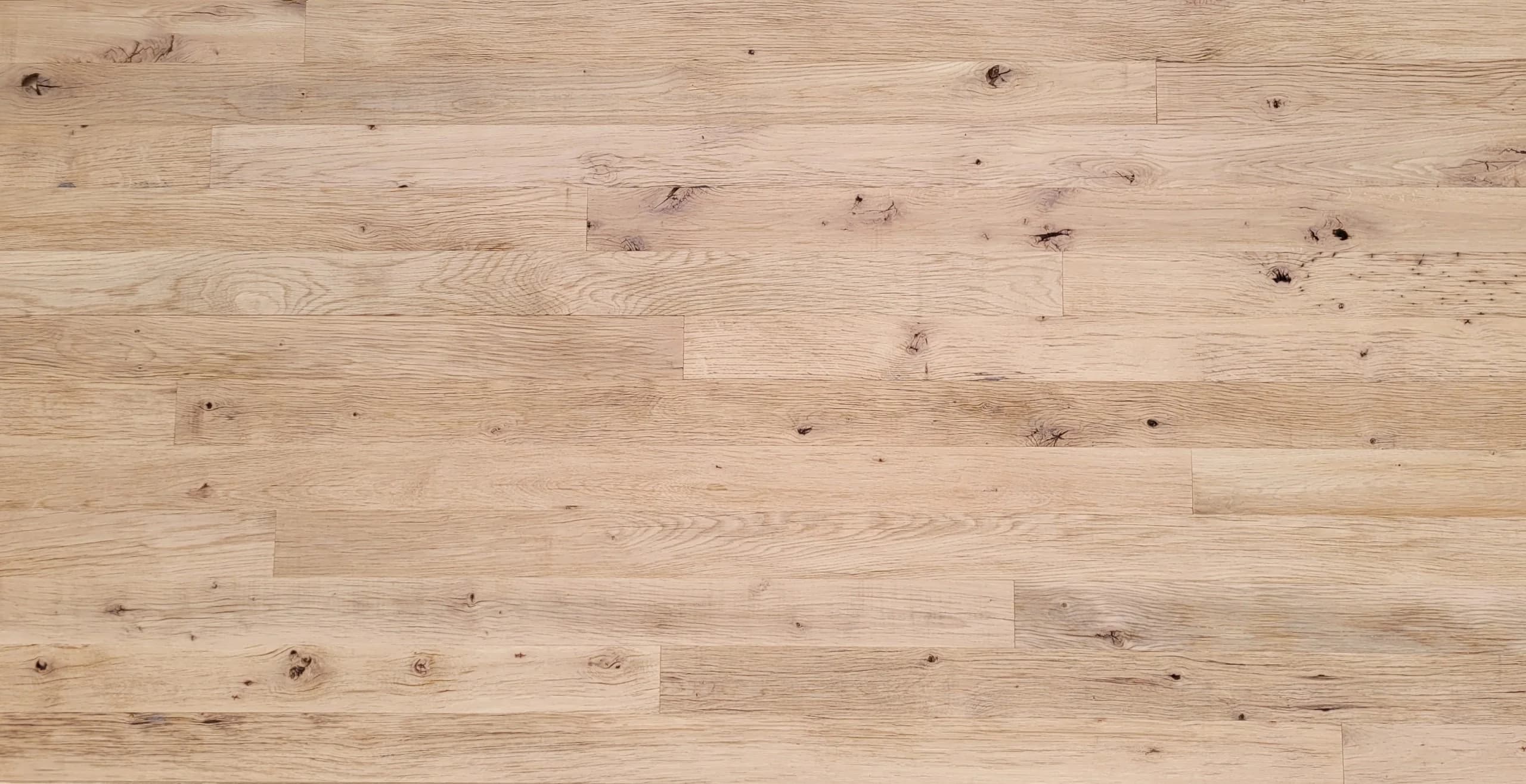
Grade A still has color variation, cracks, weather lines, and knot holes. There is less of it across a pack, and the swing from one board to the next is narrower.
That makes grade A the choice when you want the floor to read as a floor rather than as the feature of the room. Its tighter, more predictable color range also makes it the easier grade to work with next to existing millwork, cabinetry, or trim.
Grade B: The Rougher Grade
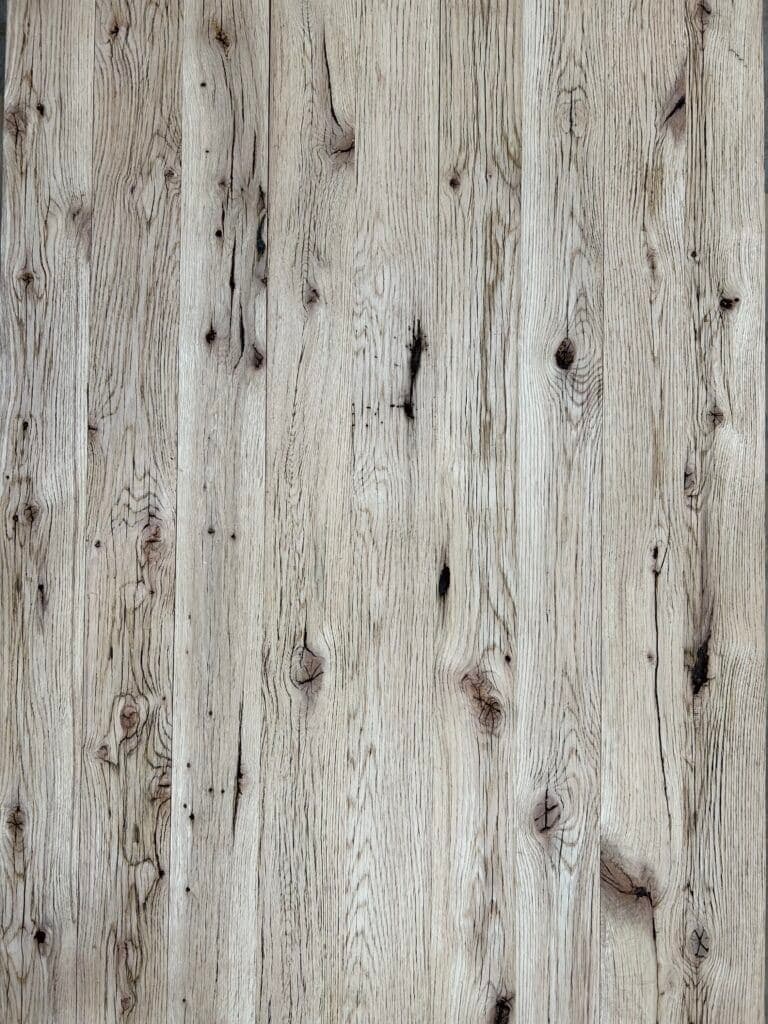
Grade B carries more of everything: deeper weather lines, more checking, more knot holes, and a color range that runs from pale gray through deep brown inside a single pack.
It is graded, kiln dried, and milled to the same specification as grade A, so it is not a lower quality floor. It is a louder one. In a large open room the variation has space to spread out and reads as texture. In a small room it can dominate, which is worth thinking about before you order.
Circle Sawn: Grade B With the Saw Marks Left In
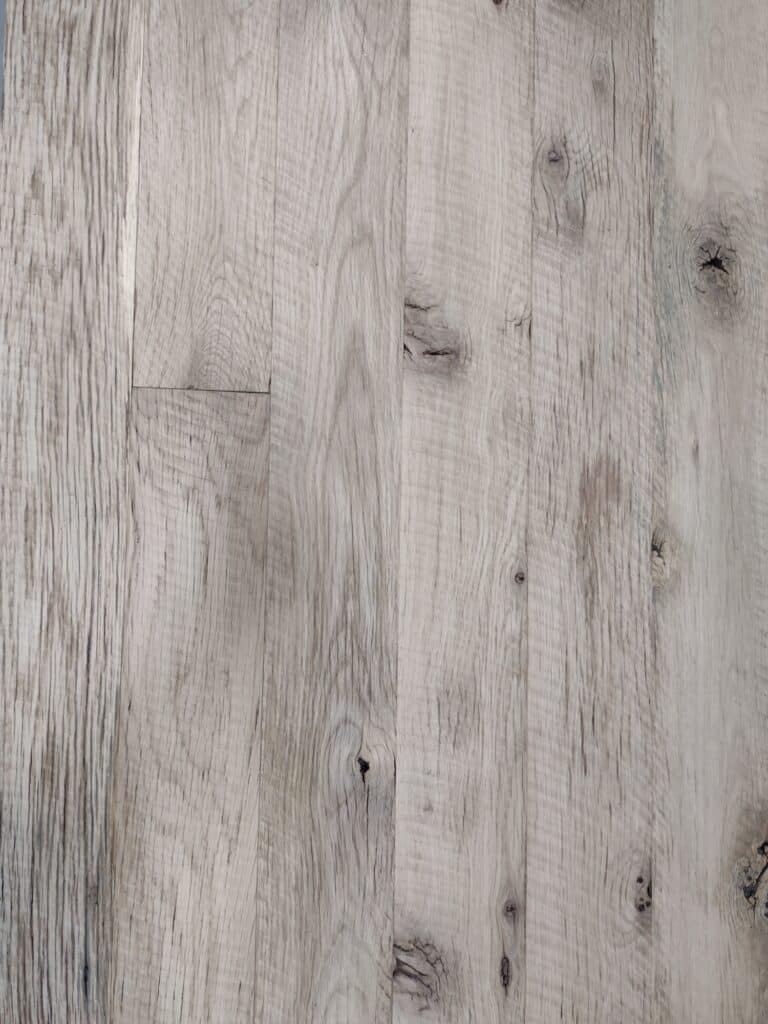
Circle sawn is grade B board with the original circle saw marks left in the face instead of milled away. The arcing cuts came from the mill blade that first sawed the board, so the surface has shallow relief rather than a flat plane. It is the most textured floor we supply.
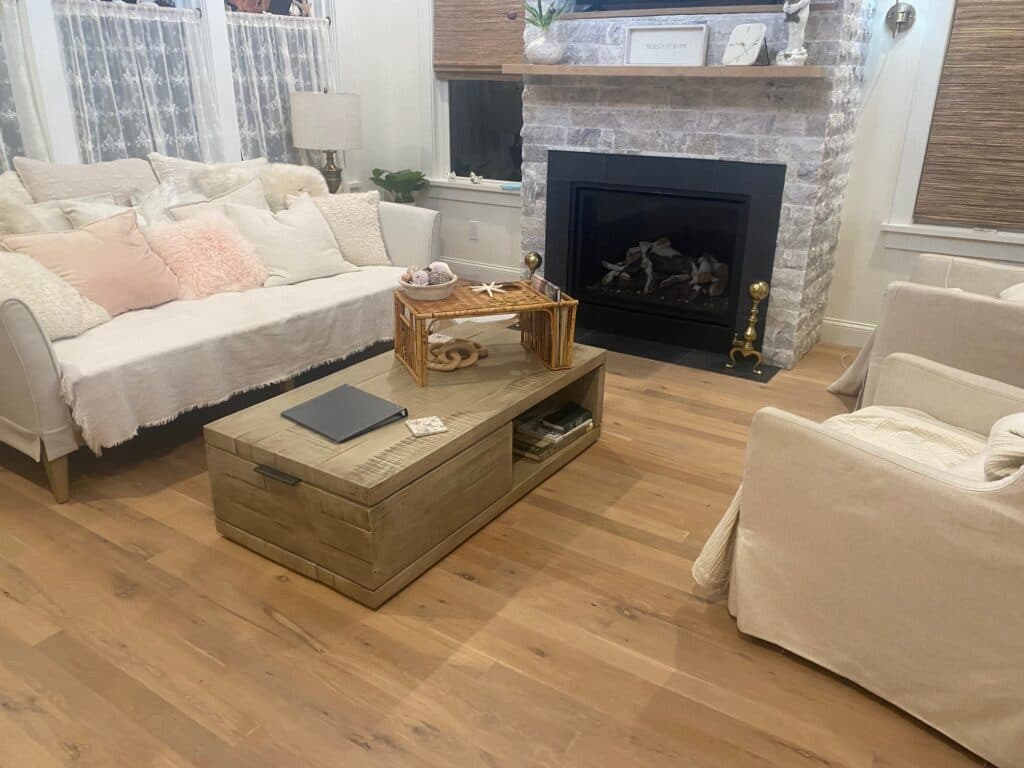
Those arcs catch low, raking light, so the floor changes through the day as the sun moves across it. Under flat overhead light it settles down and looks much closer to a standard grade B floor. You can feel the arcs barefoot, and they hold a little more dust than a flat face, which a vacuum handles.
White Oak or Red Oak
The species changes how each grade reads.
- White oak runs tan to light brown with a tight closed grain. It is the harder of the two, handles moisture better, moves less across the seasons, and takes stain more evenly.
- Red oak is warmer, with a pink to red undertone and an open grain that makes the pattern more prominent. It weathers unevenly, so one board can carry several tones down its length, and grade B red oak has the widest color range of any floor we supply.
Put the two choices together and grade A white oak is the restrained end of the line. Circle sawn red oak is the most aggressive floor we supply, because it stacks blade texture on top of the wide weathered color range of red oak.
How to Choose
- Choose grade A for a calmer floor, a smaller room, or a floor that has to sit next to existing trim and cabinetry.
- Choose grade B when the floor is meant to be part of the design and the room is big enough to let the variation spread out.
- Choose circle sawn for a room with low morning or evening sun coming in sideways, or one that already has heavy timber in it.
Whatever you are leaning toward, ask for samples. You can pick them up at our yard in Hopewell Junction, or we can mail them to you. Photographs are the weak point with reclaimed material, so it is worth seeing the board in your own light.
What Stays the Same Across Every Grade
Every grade and species is three quarter inch solid tongue and groove in 3, 4, or 4.5 inch widths, random lengths from 1.5 to 7 feet, kiln dried, and shipped unfinished. Flooring is a special order with a 500 square foot minimum and a two to three week lead time. The full specifications and ordering steps are on the reclaimed wood flooring page.